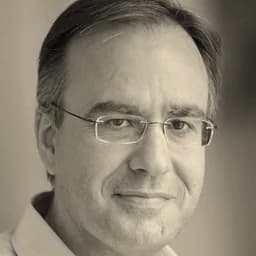
Nick Koudas
Computer science professor
University of Toronto
At a Glance
- Role
- Computer science professor, University of Toronto
- Doctorate
- University of Toronto
- Ventures
- Sysomos, Aislelabs, and Workorb
- Research
- Data systems and applied machine learning
Building Systems Around Unstructured Information
He studied at the University of Patras in Greece and the University of Maryland before earning his PhD at Toronto. His research developed algorithms and systems for processing large, diverse datasets. Sysomos and later ventures gave that work applications outside the university.
As language models became interfaces to databases, he focused on the difference between a query that runs and one that answers the intended question. “Natural language is ambiguous, and it has a lot of nuances.” A user’s business terms may not map cleanly onto a company’s database tables.
Checking What an AI Answer Means
His work on natural-language database queries considers how a system can identify uncertainty and ask for clarification. Correct syntax alone is insufficient if the model has misunderstood what the user wanted to calculate.
With Mahe Chen, Xiaoxuan Wang, and Kaiwen Chen, he also compared AI search with conventional Google results. The experiments varied industries, languages, and question phrasing. They found substantial differences in the kinds of sources engines used and in how stable their answers were across those changes.
The connection to databases is direct. A convincing interface can make a result look settled before its meaning has been checked. His research examines the systems beneath that interface and the points where a person still needs to ask another question.
Links
Sources
Portrait retained from the original profile; image unchanged.