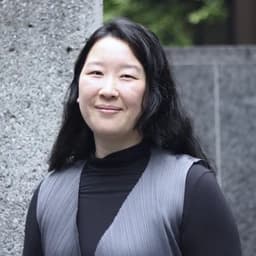
Stephanie T. Wang
PhD Candidate, Computer and Information Science
University of Pennsylvania
Stephanie T. Wang is a Stanford-trained PhD candidate in computer and information science at the University of Pennsylvania in Philadelphia, Pennsylvania, where she audits algorithmic systems in news, civic information and advertising. She co-led a 2026 browser experiment with 1,100 people showing that Google's AI Mode cut click-through to outside publishers by 18.8 percentage points.
Ten Days Inside Google Search
"We recruited 1,100 participants for a ten-day browser experiment and randomly assigned them to Current Search, No AI Search, or AI Mode Search," Wang wrote on Bluesky when the preprint went up in September 2026. "We measured how people searched, whether they clicked through to external sites, and how they perceived the search experience."
She is co-first author of the study with Jeffrey Gleason, alongside Yakov Bart, Christo Wilson and her advisor, Danaé Metaxa. Removing AI Overviews, already standard at the time, raised click-through to outside sites by 8.8 percentage points. AI Mode cut it by 18.8 points, including drops of 12.5 points for news sites, 21.2 for Reddit and 9.9 for Wikipedia. It also cut daily search sessions by nearly one, and by more than two among heavy Google users.
Fewer Sources and Lower Trust
The participants were not won over. "Negative reactions to AI Mode outweighed positive ones," Wang wrote. "The biggest complaints were difficulty navigating to sites, and fewer or less varied sources." AI Mode lowered ratings of trust, usefulness, satisfaction and relevance, and it raised searching on Bing, DuckDuckGo or Yahoo by 11.2 percentage points.
She framed the work around a live dispute over whether AI search still acts "as intermediary connecting users to the web, or increasingly a destination that competes with the sources it surfaces."
The paper, under review at PNAS Nexus, was presented at the Stanford Trust and Safety Research Conference, and she is giving a talk at MIT's Conference on Digital Experimentation in November 2026.
Auditing Feeds, Screenplays and Chatbots
An earlier audit compared algorithmic and chronological timelines on X, formerly Twitter, for a CSCW 2024 paper. "It turned out that, during the time we performed this audit, X/Twitter's algorithmic feeds were presenting users with information that was milder and overall less polarizing than the chronological timeline," Wang told Penn Engineering. "We also found that the algorithmically-curated feeds presented users with less news content in general."
She has since co-authored a FAccT 2026 audit of gender bias in screenplays written by language models and an ICWSM 2026 study of what TikTok users see as political content.
She is also lead author of a paper on Admix, a design probe that gives users more say over targeted ads, and is running a multilingual audit of AI chatbots that give out local voting information ahead of the 2026 US midterms.
Symbolic Systems at Stanford and a RegLab Fellowship
Wang earned a bachelor's degree in symbolic systems and a master's degree in computer science at Stanford University before joining Metaxa's lab in the Penn HCI group. Her doctorate has been supported by an Amazon Web Services gift for research in trustworthy AI. In the summer of 2026 she spent ten weeks as a Summer Institute Fellow at Stanford RegLab, working with a government agency to bring legal AI tools into its workflows.